Navratri 2026: Nine Colours, Nine Nights — and What Actually Survives Garba
Navratri 2026 runs 11–19 October, with Dussehra on the 20th. A colour-by-colour styling guide, plus the honest bit nobody writes about: what garba does to jewellery.
Navratri 2026 runs from Sunday, 11 October to Monday, 19 October, with Vijayadashami on Tuesday, 20 October. Nine nights, nine colours, and — if you actually play garba — nine nights of sweat, movement and things catching on chaniya choli sleeves.
Most Navratri jewellery guides stop at "match your colour". This one covers that, and then the part that decides whether your jewellery makes it to Dussehra.
The nine colours for 2026
The day-wise colour sequence for Sharad Navratri 2026:
| Day | Date | Colour |
|---|---|---|
| 1 | Sun, 11 Oct | Orange |
| 2 | Mon, 12 Oct | White |
| 3 | Tue, 13 Oct | Red |
| 4 | Wed, 14 Oct | Royal Blue |
| 5 | Thu, 15 Oct | Yellow |
| 6 | Fri, 16 Oct | Green |
| 7 | Sat, 17 Oct | Grey |
| 8 | Sun, 18 Oct | Purple |
| 9 | Mon, 19 Oct | Peacock Green |
A note of honesty: these lists vary by region and by source. Different panchangs and different communities order them differently, and Day 1 in particular is listed as orange in some places and yellow in others. Treat this as a guide, not scripture — follow whatever your family or your garba circle is doing.
How to style gold against each colour
You don't need nine sets of jewellery. Gold-tone works against all nine — what changes is how much of it.
Warm colours (orange, red, yellow): these already carry a lot of visual heat. Keep metal minimal — studs or small hoops, one thin chain. Adding heavy gold to a red chaniya choli makes both fight for attention.
Cool colours (royal blue, purple, peacock green, green): gold pops hardest here. This is where a statement neckpiece or a proper pair of drops earns its place.
Neutrals (white, grey): the easiest nights. Anything works, so wear the piece you actually like most. White especially lets pearls and mother-of-pearl read properly instead of disappearing.
The part nobody writes about: garba is brutal on jewellery
Nine nights of raas-garba means:
- Sustained sweat for two to three hours at a stretch — the single fastest way to strip cheap plating
- Arm movement with dandiya sticks, which is why bangles and bracelets take a beating
- Hair, dupattas and odhnis catching on earring hooks and long chains
- Being taken on and off in a rush every night for nine nights
Flash-plated jewellery — the ₹99 kind sold in bulk before every festival — will not survive this. It fades at the clasp and the earring post first, usually by night four, because those are the points with the most sweat contact and friction.
If you want jewellery that lasts past Dussehra, the specification you're looking for is gold plating with an anti-tarnish seal over a skin-safe, nickel-free base. That's what stops sweat reacting with the metal underneath.
Practical picks for the nine nights
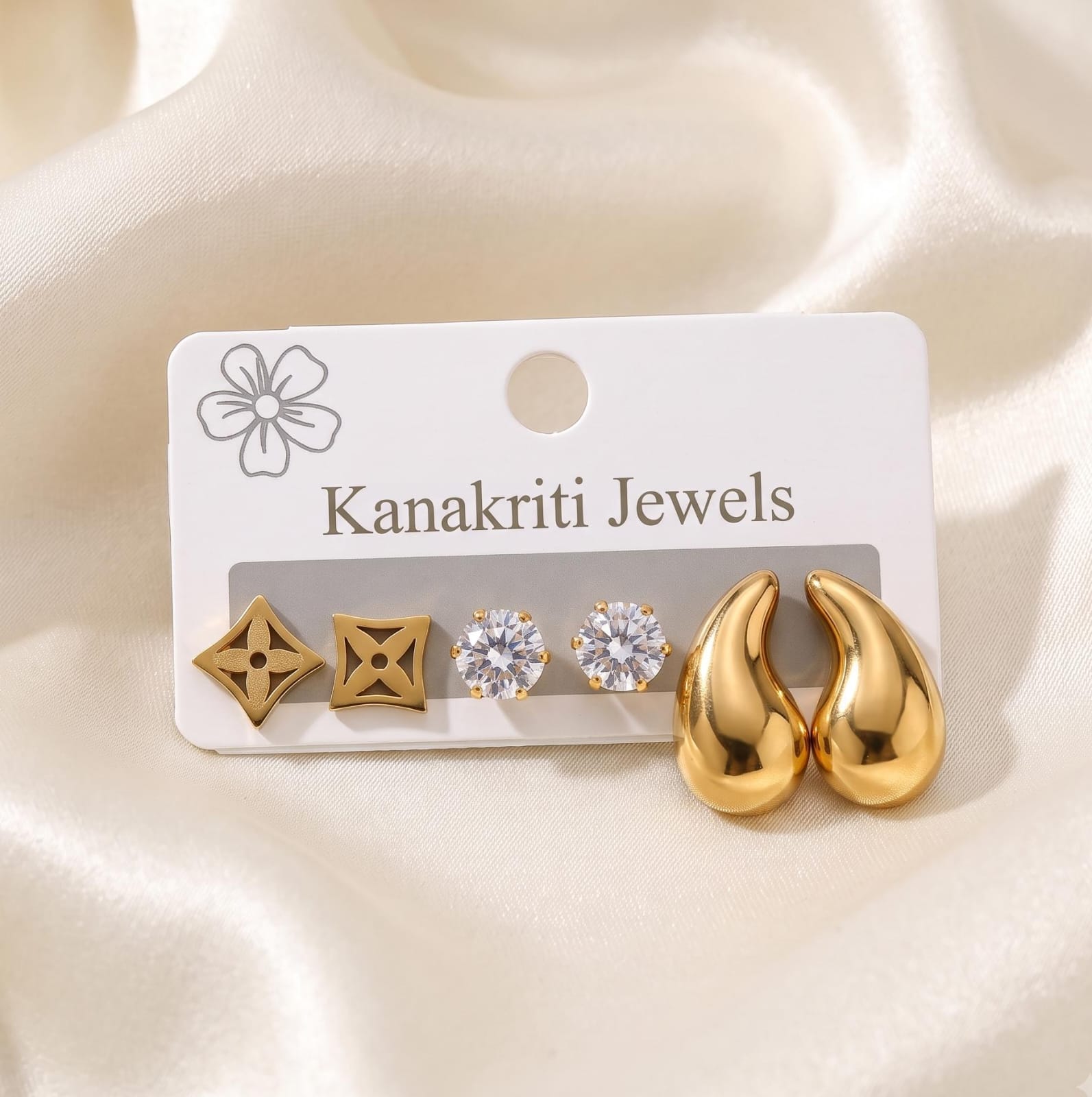
- Earrings: studs and small-to-medium hoops for garba nights; save the long jhumkas for the aarti and the days you're not dancing. If it can be caught by a dupatta mid-spin, it will be. Our anti-tarnish earrings are built for exactly this trade-off.
- Neck: one piece, not three. Layering looks great standing still and terrible after twenty minutes of garba. A single anti-tarnish pendant or chain is the safer call.
- Hands: rings are the most durable option for a dancing night. Bangles look right but take the most impact — if you wear them, wear ones you don't mind scuffing.
- The pieces you'll actually keep wearing: buy at least a couple that work after Navratri too. Festive-only jewellery is the most expensive kind, because the cost-per-wear is enormous.
One care habit for the nine nights
Wipe each piece with a dry, soft cloth when you take it off — every single night, not on day nine. Thirty seconds. Sweat left sitting on plating overnight for nine consecutive nights is what actually kills it, not the dancing.
Store them in a dry box or pouch, not loose in a drawer where they rub against each other.
Shop the pieces in this guide
Nine nights is a lot of wear. These are the categories that hold up to it — gold-plated, anti-tarnish sealed, nickel-free, ₹199–399.
- Earrings — studs and small hoops for garba nights; drops for the aarti
- Necklaces & Pendants — one piece, not three; a thin chain or single pendant survives a spin
- Rings — the most durable thing you can wear while playing dandiya
- Bracelets — beautiful, and the pieces that take the most impact from the sticks
Browse the full range, or the waterproof edit if you sweat through a garba night.
Keep reading: What is anti-tarnish jewellery? · Can you wear gold-plated jewellery every day? · Shop the anti-tarnish range
Shop anti-tarnish, waterproof jewellery
Everyday pieces that won't fade — backed by a 6-month warranty.
Frequently asked questions
What are the Navratri 2026 dates?
Sharad Navratri 2026 runs from Sunday, 11 October to Monday, 19 October, with Vijayadashami (Dussehra) on Tuesday, 20 October.
What are the nine colours of Navratri 2026?
The commonly listed sequence is orange, white, red, royal blue, yellow, green, grey, purple and peacock green. Lists do vary by region and panchang, so follow whatever your family or garba group is using.
What jewellery is best for playing garba?
Studs or small hoops rather than long jhumkas, one neckpiece instead of layers, and rings over bangles. Anything that dangles will get caught in a dupatta or odhni mid-spin.
Why does festival jewellery fade after a few nights?
Sustained sweat plus friction at the clasp and earring post. Flash-plated jewellery has too thin a gold layer to survive it. Heavier plating with an anti-tarnish seal over a nickel-free base is what holds up.
How do I care for jewellery during Navratri?
Wipe each piece with a dry, soft cloth every night when you take it off — not at the end of the festival — and store it in a dry pouch rather than loose in a drawer.