
Festive Sale Jewellery: What Still Looks Good in January
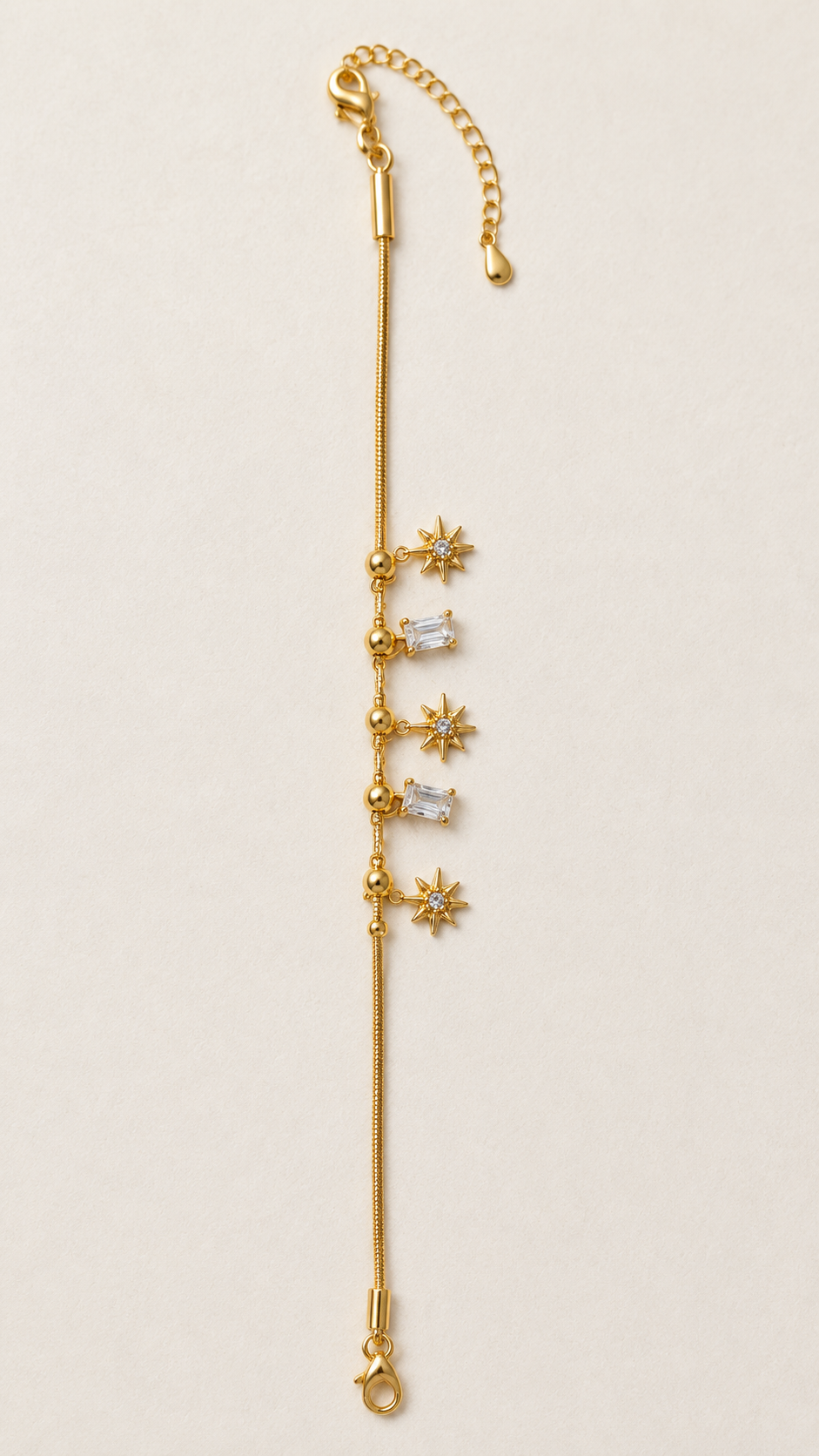
Myntra's Big Fashion Festival and the other festive sales are built around trends. Here's how to buy in one without ending up with a drawer of pieces you wore once.
Every festive sale — Myntra's Big Fashion Festival included — is organised around trends, because trends are what make you buy something you weren't looking for. That's not a criticism; it's the format. The question is what's left in your drawer three months later.
Here's the framework we'd use.
The 70/30 rule
For every ₹100 you spend in a festive sale, put ₹70 into staples and ₹30 into trends.
Staples are pieces whose look doesn't depend on the year: plain studs, small hoops, a thin chain, a solitaire-style ring, a simple pendant. You will wear these several times a week for years. They're boring to shop for and they're the entire reason your jewellery drawer works.
Trends are the pieces that make an outfit feel current — this season's shape, this season's motif. They're genuinely worth buying, at a price where wearing them a dozen times is fine.
Where sale-season buying goes wrong is the ratio flipping. Sales are merchandised by trend, so the trend pieces are the ones in front of you, and it's easy to walk away with five statements and no staples.
The three questions before you add to cart
1. Can I name three outfits I already own that this works with?
If you can't name three, you're buying the piece and the outfit it needs. That's a much bigger purchase than the price tag suggests.
2. Would I wear this on a Tuesday?
Not "would I wear this to a wedding" — occasion-wear justifies itself once and then sits. Tuesday is the test that separates a staple from a costume.
3. What happens to it after sixty days of wear?
This is the one nobody asks. A trend piece worn twice can be flash-plated and it doesn't matter. A staple worn four times a week absolutely cannot — it'll be patchy by December. The more you plan to wear something, the more the plating specification matters.
What "lasts" actually means in fashion jewellery
Two different kinds of lasting, and people conflate them:
- Style lasting — the design still looks right in two years. Solved by buying simple shapes.
- Material lasting — the gold colour is still there in two years. Solved by plating thickness and an anti-tarnish seal over a nickel-free base.
A piece can pass one and fail the other. A classic hoop that fades in a month is as useless as a well-made piece in last year's shape. For staples you need both; for trend pieces, style-lasting doesn't matter much, so buy them cheap and enjoy them.
The cost-per-wear maths, quickly
- Statement piece at ₹1,200, worn 3 times → ₹400 a wear
- Plain studs at ₹249, worn 200 times → ₹1.25 a wear
The studs are the better fashion purchase by two orders of magnitude, and nobody ever posts about buying studs. Worth remembering when a sale page is showing you the ₹1,200 piece.
A practical festive-sale basket
If you're stocking up this season, this covers most of what you'll actually reach for:
- Two pairs of everyday earrings — one stud, one small hoop (daily-wear earrings)
- One thin chain or simple pendant you can wear under anything (anti-tarnish pendants)
- One ring that isn't tied to an outfit
- One trend piece you genuinely love — bought knowing it's a trend piece
- One thing for the office that reads as put-together without being loud (office-wear jewellery)
That's a working set. Everything else is addition, not foundation.
Our position, stated plainly
We don't run a festive sale, because our everyday prices are ₹199–399 — there's no inflated MRP here to discount against. What we do offer is the part that decides whether a staple stays a staple: gold plating with an anti-tarnish seal over a nickel-free, skin-safe base, a 6-month warranty against fading, and 7-day free returns with free doorstep pickup.
Buy the trend pieces wherever they're cheapest. Buy the staples from whoever will tell you what's under the gold.
Where to find the staples
The 70% of your budget — the pieces you'll still be reaching for in January:
- Earrings — plain studs and small hoops, the highest cost-per-wear winners
- Necklaces & Pendants — a thin chain or simple pendant that goes under everything
- Rings — a plain band or solitaire style that isn't tied to an outfit
- Bracelets — the one place to spend a little more, since clasps take the wear
Everything's ₹199–399 year-round with a 6-month warranty against fading. Start with the bestsellers or browse the whole range.
Keep reading: Daily-wear luxury: gold-plated jewellery you can live in · Can you wear gold-plated jewellery every day? · Shop bestsellers
Shop anti-tarnish, waterproof jewellery
Everyday pieces that won't fade — backed by a 6-month warranty.
Frequently asked questions
How should I split my budget in a festive jewellery sale?
Roughly 70% on staples — studs, hoops, a thin chain, a plain ring — and 30% on trend pieces. Sales are merchandised by trend, so the ratio tends to flip unless you plan it.
What counts as a jewellery staple?
Pieces whose look doesn't depend on the year: plain studs, small hoops, a thin chain, a simple pendant, a plain ring. You wear these several times a week for years.
Does plating quality matter for trend pieces?
Much less. A piece you'll wear a dozen times can be lightly plated without it mattering. It's the staples — worn several times a week — where plating thickness and an anti-tarnish seal decide whether they survive.
What is the best value jewellery purchase in a sale?
By cost-per-wear, everyday staples win by a wide margin. Studs at ₹249 worn 200 times cost about ₹1.25 a wear; a ₹1,200 statement piece worn three times costs ₹400 a wear.